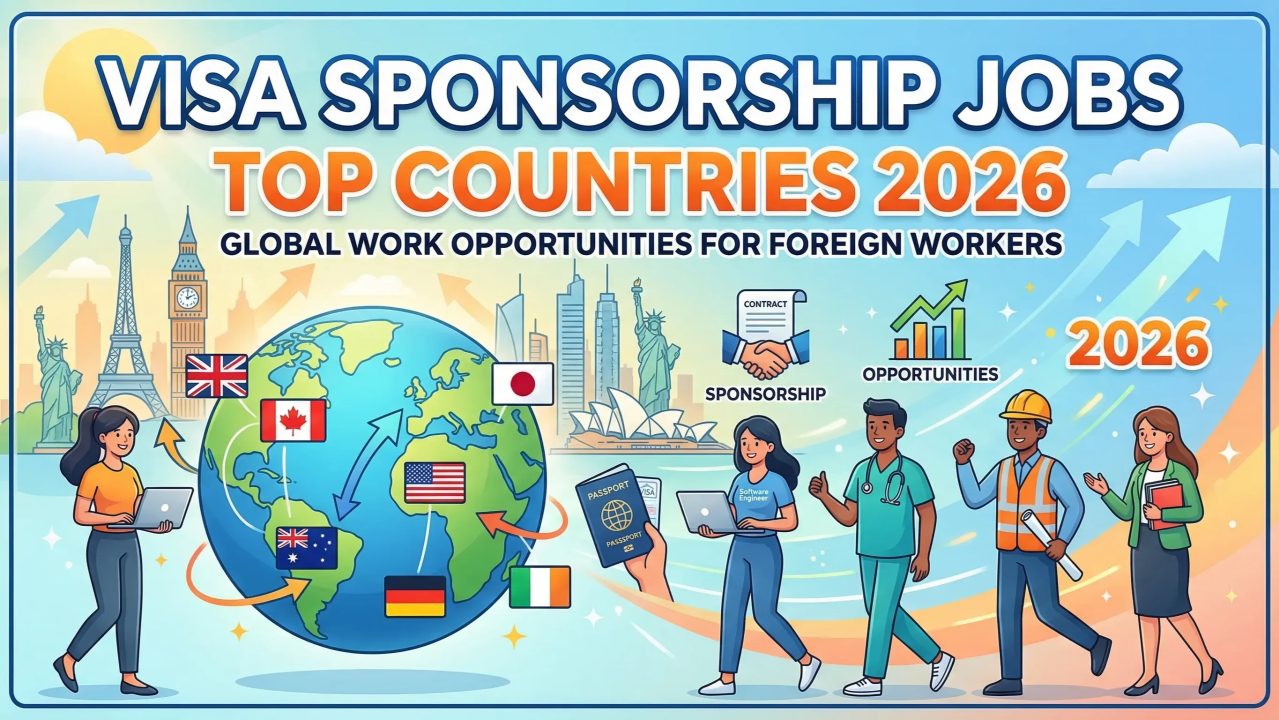
Every year, millions of people search for opportunities to work abroad, but only a few countries consistently offer structured work visa sponsorship programs that actively recruit international workers.
In 2026, global labor shortages continue to shape immigration policies. Many developed countries are now competing for foreign talent in healthcare, technology, construction, logistics, and agriculture.
Instead of focusing only on popular destinations, this guide highlights countries where employers are actively dependent on foreign workers, making them more realistic options for sponsorship opportunities.
What Makes a Country Good for Work Visa Sponsorship?
Not all countries offer equal chances for foreign job seekers. The best destinations usually share these characteristics:
- Persistent labor shortages
- Employer-driven immigration systems
- Clear visa pathways for foreign workers
- High demand for both skilled and entry-level labor
- Transparent government job portals
Countries that meet these conditions are more likely to sponsor international applicants.
1. Canada 🇨🇦 — Structured Employer Sponsorship System
Canada remains one of the most organized countries for foreign worker programs. Employers can legally hire international candidates when local workers are unavailable.
Why Canada Stands Out
- Clear immigration pathways linked to employment
- High demand across multiple provinces
- Strong protection for foreign workers
Most In-Demand Sectors
- Healthcare and caregiving
- Transportation and trucking
- Skilled trades (electricians, welders)
- Technology and IT
- Agriculture and food processing
Official Resource
2. United Kingdom 🇬🇧 — Expanding Skilled Worker System
The UK continues to expand its Skilled Worker visa route, especially in healthcare and essential services.
Why the UK Is Attractive
- Large number of licensed sponsors
- Strong healthcare recruitment demand
- Stable long-term work pathways
Key Job Sectors
- Care assistants and support workers
- Nurses and healthcare staff
- Engineering and construction
- Teaching and education
Official Resource
3. Germany 🇩🇪 — Europe’s Fast-Growing Labor Market
Germany has one of the strongest economies in Europe and is actively modernizing its immigration system to attract global talent.
Why Germany Needs Foreign Workers
- Aging population
- High demand in technical industries
- Shortage of skilled professionals
High-Demand Roles
- Software developers
- Mechanical engineers
- Nurses and elderly care workers
- Skilled technicians
Official Resource
4. Australia 🇦🇺 — Skill-Based Immigration System
Australia uses a points-based immigration model that prioritizes skilled workers for long-term residency.
Why Australia Is Competitive
- High salaries across skilled industries
- Regional visa incentives
- Strong demand for trades and healthcare
In-Demand Jobs
- Electricians and plumbers
- Registered nurses
- Civil and mechanical engineers
- IT professionals
Official Resource
5. New Zealand 🇳🇿 — Seasonal and Skilled Worker Balance
New Zealand offers both seasonal work programs and skilled employment pathways.
Why Workers Choose New Zealand
- Easier entry-level job access
- Seasonal employment opportunities
- Safe working environment
Popular Jobs
- Farm and agricultural workers
- Construction laborers
- Hospitality staff
- Healthcare assistants
Official Resource
6. United States 🇺🇸 — High Salary but Competitive System
The U.S. offers some of the highest-paying jobs globally but has a more competitive sponsorship system.
Why It’s Competitive
- Lottery-based visa selection (H-1B)
- High employer requirements
- Limited annual visa slots
High-Demand Jobs
- Software engineers
- Data analysts
- Healthcare specialists
- Financial professionals
Official Resource
7. Gulf Countries (UAE, Qatar, Saudi Arabia) 🌍
The Middle East remains a major destination for foreign workers, especially in construction and service industries.
Why Gulf Countries Attract Workers
- Tax-free income (in many cases)
- High demand for labor
- Fast hiring process
Common Jobs
- Construction workers
- Drivers
- Hospitality staff
- Security personnel
Official Resource
Industries Driving Global Sponsorship Demand
Across all countries, the same sectors consistently recruit foreign workers:
- Healthcare and nursing
- Construction and engineering
- Information technology
- Agriculture and farming
- Logistics and transportation
- Hospitality and tourism
Requirements for Work Visa Sponsorship
While requirements vary, most countries expect:
- Verified job offer from an employer
- Relevant experience or qualifications
- Valid passport
- Clean background record
- Medical clearance (in some cases)
- Basic communication skills
How to Improve Your Chances of Getting Sponsored
Focus on High-Demand Skills
Fields like healthcare, IT, and skilled trades are most in demand globally.
Apply Through Verified Employers
Avoid unofficial job offers and unregistered recruiters.
Tailor Your CV for International Standards
Many countries expect structured, professional resumes.
Apply Consistently
Sponsorship opportunities often require multiple applications.
Red Flags to Watch Out For
- Job offers without interviews
- Guaranteed visa approvals
- Requests for large upfront payments
- Fake employer websites
- Unverified recruitment agents
Frequently Asked Questions
Which country gives the easiest work visa sponsorship?
Canada, Germany, and New Zealand generally have more structured pathways.
Can I get sponsorship without experience?
Yes, especially in agriculture, caregiving, and entry-level labor roles.
Do all countries require degrees?
No. Many jobs require skills or training instead of formal education.
Conclusion
Work visa sponsorship opportunities in 2026 remain strong, but success depends on choosing the right countries, targeting in-demand industries, and applying through legitimate employers.
Rather than focusing only on popular destinations, job seekers should prioritize countries with real labor shortages and structured immigration systems.
Leave a Reply